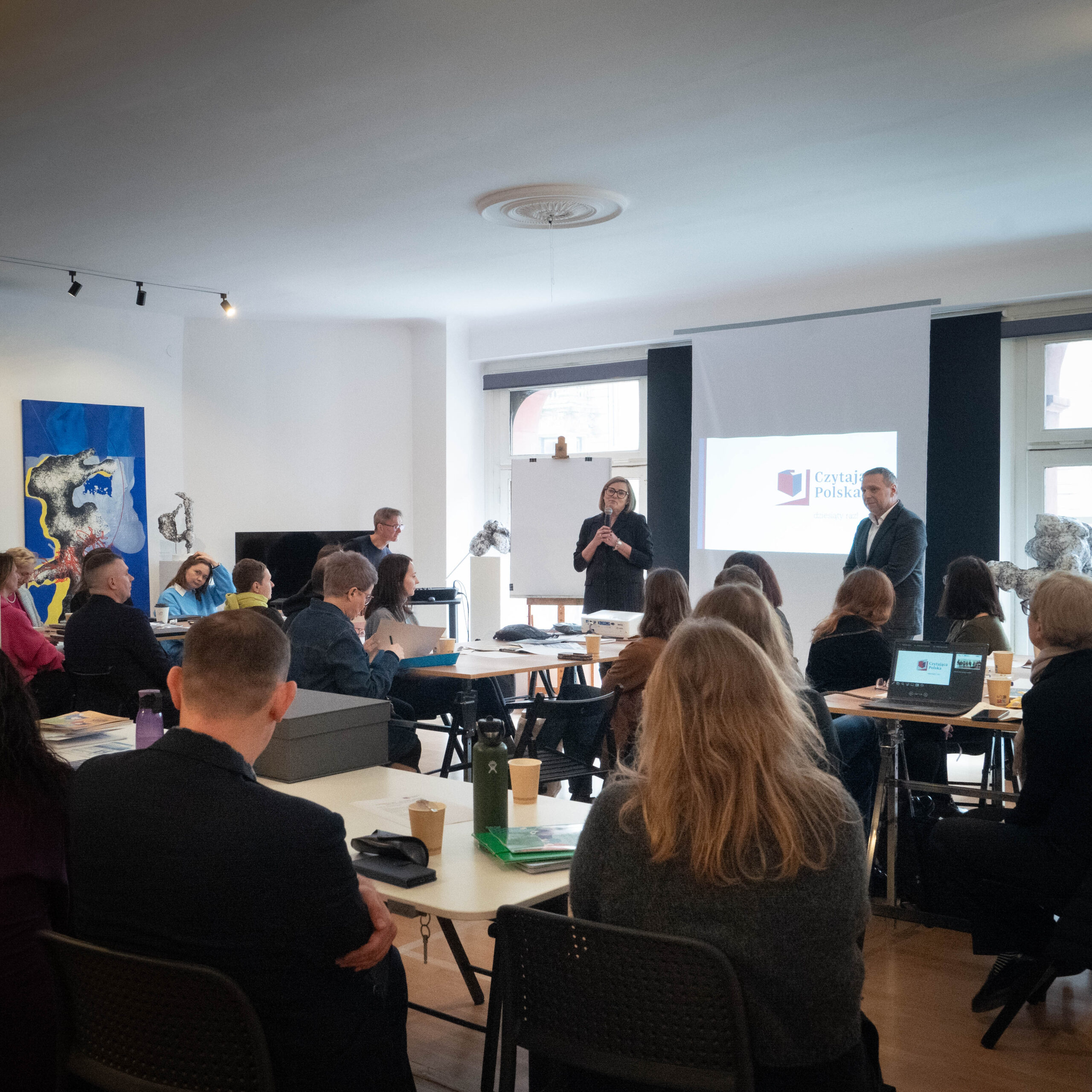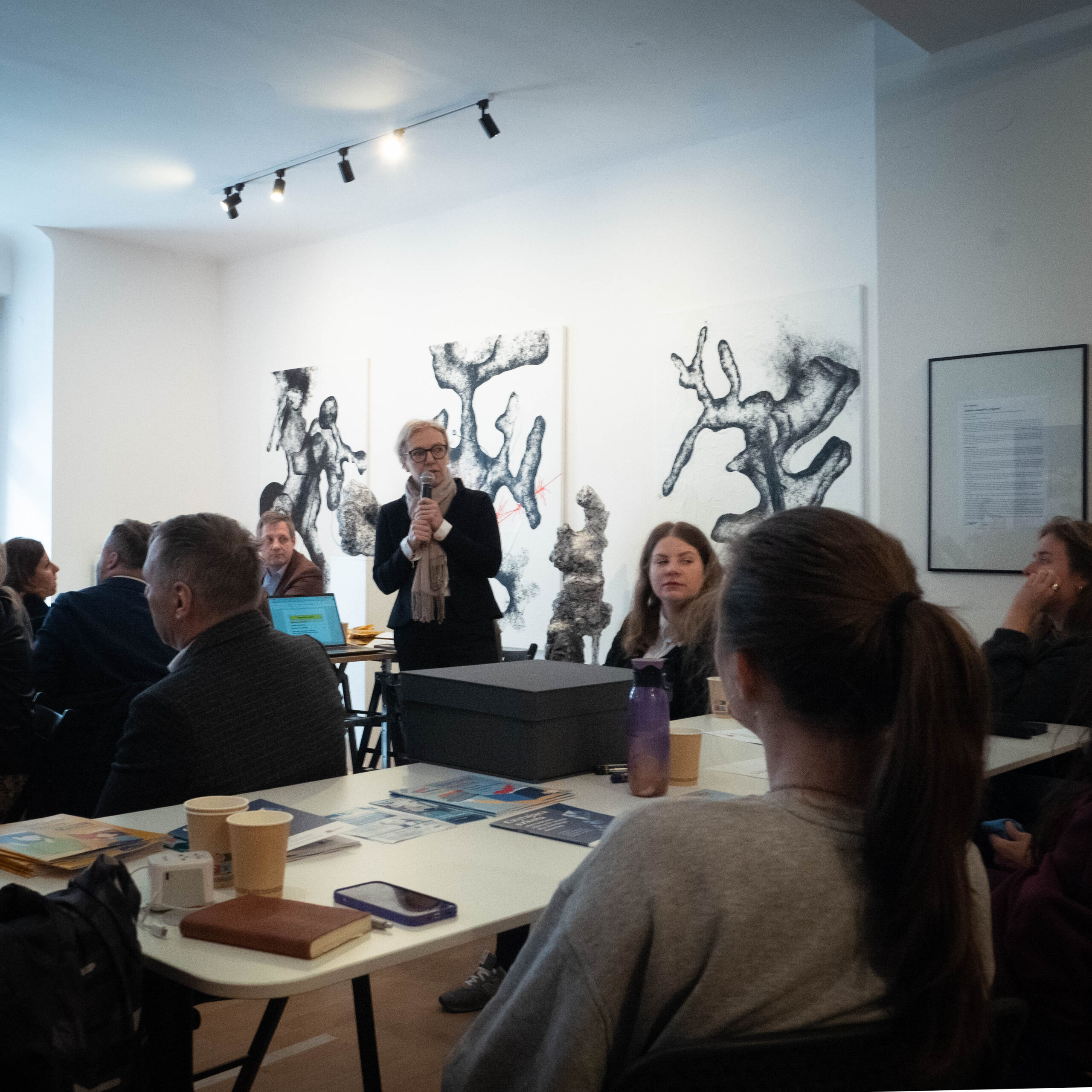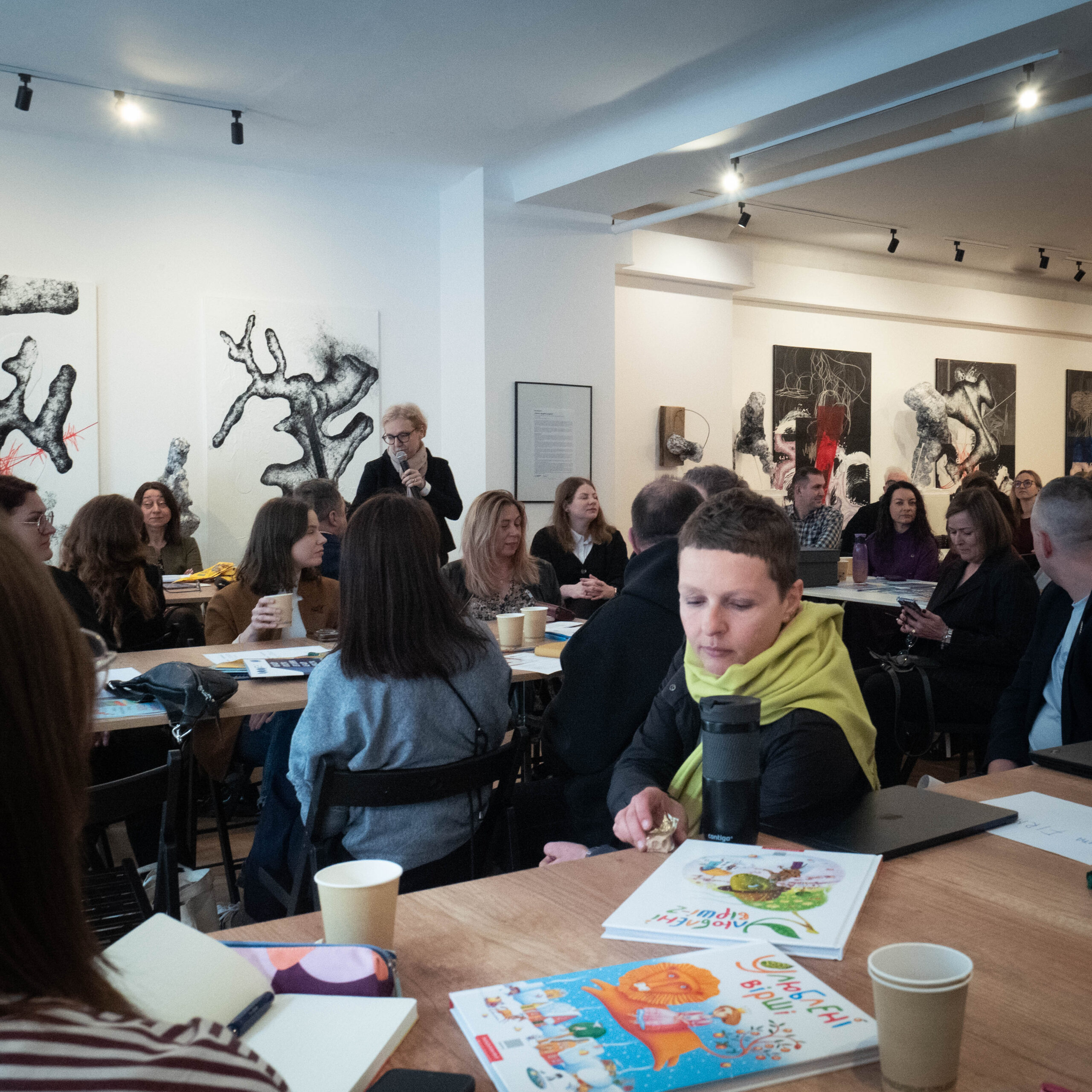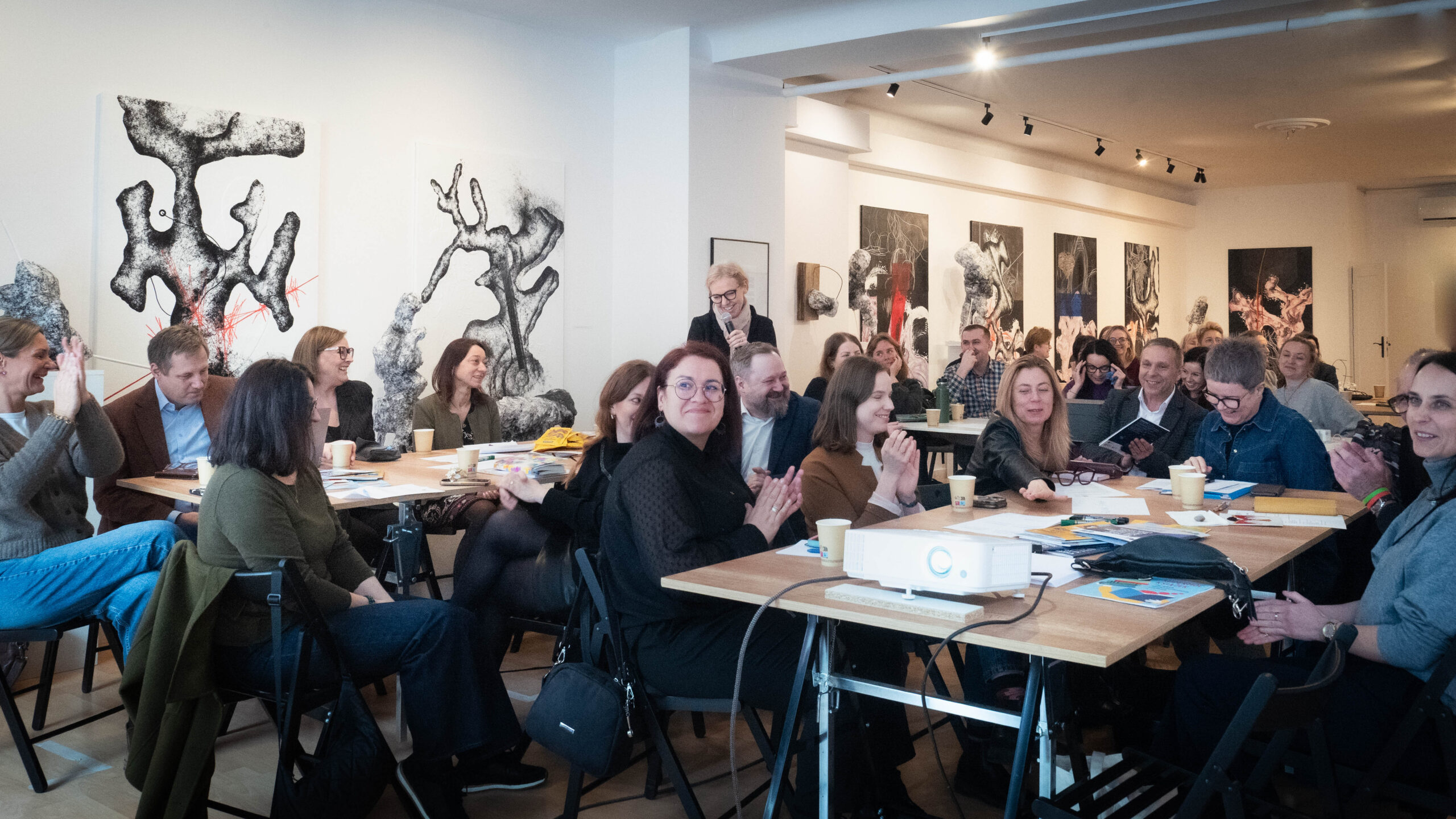

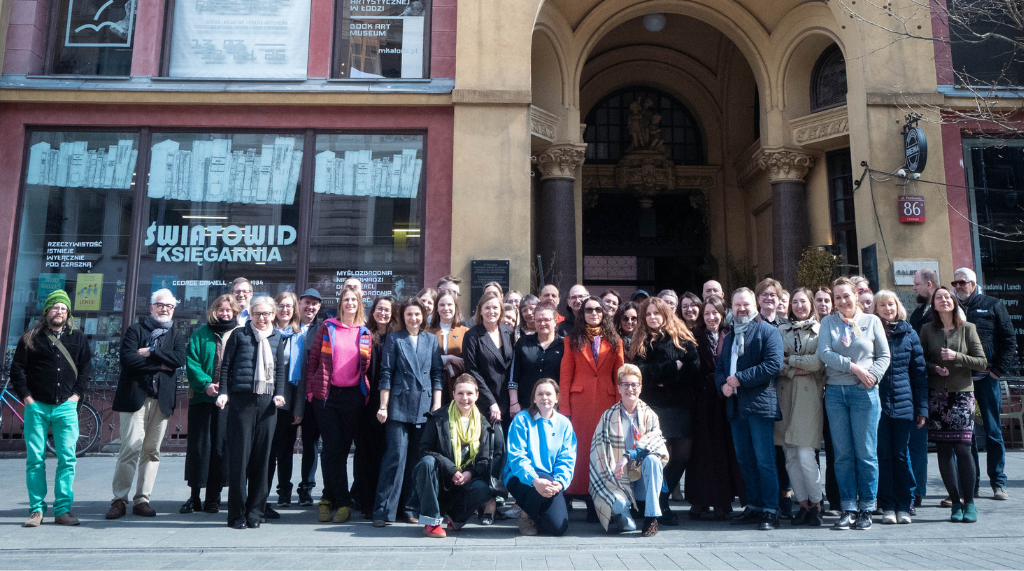
For a moment, on April 9-10, Łódź became the capital of Polish reading. The tenth workshop of the "Reading Poland" Coalition took place at the Book Art Museum on the famous Piotrkowska Street.
„"Reading Poland" is an informal coalition of individuals, institutions, non-governmental organizations and companies united by the awareness that the future of Poland depends on reading. The coalition was established several months before the pandemic and emphasizes that its dream is to create conditions for the full development of the potential of every child in Poland. Research confirms that the private activity of reading books translates into improved life opportunities for individuals and, consequently, enormous social benefits: an increase in the number of citizens participating in social and economic life, and an increase in the country's scientific, economic, and innovative potential. you can read on the website www.czytacapolska.pl.
In Łódź, Coalition members summarized the results of their joint work, which is a diverse collection of surprising and innovative activities. The meeting opened with Marcin Derengowski, deputy director of the Culture Department of Łódź – We are delighted that after Krakow, Lublin, Olsztyn, Poznań, Sopot, Warsaw, Wrocław, and Zabrze, "Reading Poland" has finally arrived in Łódź! We have high ambitions when it comes to culture; the reform of public libraries in Łódź is an achievement we are very proud of, demonstrating the crucial importance of infrastructure. - he said.
I'm delighted that the Book Art Museum has chosen to host the anniversary "Reading Poland" workshops. This initiative is becoming increasingly well-known and valued in various circles interested in the topic, as we're simply beginning to see the results of the Coalition's work, even though we all know that conversations often don't translate into any tangible results.she emphasized Halina Bernat, Director of the Book Art Museum in Łódź.
The coalition has developed a new model for understanding the importance of reading at the societal level., demonstrates in its publications that reading is not a tool for building culture, but a powerful and critical factor in civilizational development in numerous areas: from health, well-being, and mental and emotional stability to agency, teamwork, leadership, and resilience, and finally to scientific, innovative, and economic potential. The coalition is effectively building a completely new narrative about reading as the foundation and binder of our civilization.
„"Narrative" has been a rather overused word in recent years. But the idea that how we describe reality matters greatly, and that narrative influences reality, is true. Therefore, the story of the importance of reading is crucial and can not only change our understanding of the role of reading but, consequently, influence decisions and investments, creating a system in which more children will have the opportunity to realize their potential and dreams—because, for example, their parents will hear during their first vaccination visit that they should play with books and talk to them a lot. – he emphasizes Maria Deskur, president of the Universal Reading Foundation, which coordinates the work of "Reading Poland"„.
The change in storytelling has already begun to translate into a change in the way we use reading as a tool: at the level of the development strategy in Zabrze, reading was included as a factor in the city's development in the official strategy (as a result of which reading is now dealt with not only by the Department of Culture and Education but also by the entire city hall, including clinics, nurseries and the employment office), the Warmian-Masurian Voivodeship was the first in Poland to introduce a province-wide reading development program, which, in addition to libraries, schools
and kindergartens, clinics, nurseries, and businesses have been included. Elements of such changes are being introduced
in various places in Poland: from Greater Poland, through Wrocław, Choszczno, Zamość, Lublin, Szczebrzeszyn to Wisła and Kraków.
Stepping outside your comfort zone is challenging, but incredibly empowering. Building a provincial reading development program is an unprecedented undertaking. We set ourselves the goal of visiting a clinic, which may sound trivial, but in reality, it was a significant challenge. Because as librarians, we're trained to catalog and lend books,
We don't have any training in selling the idea of reading; that's a very different skill. We're delighted,
that we decided to take this new step, it is a challenge, but also a powerful motivation, we see the first results, cooperation is getting closer – she said Adrianna Walendziak, director of the Provincial Public Library in Olsztyn., co-creator of the first Provincial Reading Development Program in Poland.
The work of "Reading Poland" resulted in the creation of expert publication "Reading School"„, which was then presented as a basis for thinking about introducing language competences in schools as fundamental, in accordance with the graduate profile developed by the Ministry of National Education and the new core curriculum, which comes into force on
September 1, 2026. What does this mean exactly? It means that The publication of "Czytająca Polska" is today one of the few professional sources of knowledge and inspiration for all Polish schools that
from September 1st, they are obliged to build a holistic strategy to support language competences (i.e. reading, writing and understanding) – not only in Polish lessons, but in all classes.
Another unprecedented effect of the work of "Reading Poland" is creation of a free online course "I read, therefore I think, I act and I am a citizen"„, which guides participants from a presentation of research in various fields to practical information on how to use reading as a tool not only in all school subjects but also more broadly. The course was created a few months ago, and already the first university, The Academy of Fine Arts in Warsaw recommended it to all its students.
The longer we work together, the more we see that no single organization, even a large one, can tackle complex challenges alone. The diversity of our perspectives is absolutely invaluable. We come from very different backgrounds, from towns with very different populations, from all over Poland – this allows us to see reading from the perspective of a school, but
and publishers, kindergartens and clinics, small foundations and large institutions. A multitude of perspectives
and open conversation mean that the solutions we propose have a chance to actually work
in these different realities that we represent. It's extremely important – she emphasized Agata Saracyn from the Association of Rural Communes of the Republic of Poland, a long-time member of the coalition.
The "Reading Poland" Coalition is revealing little about its next plans at the moment, but it is known that,
that work is underway on material addressed to business, solutions for caregivers of children 0-3, and an expert publication for decision-makers.
I've been involved in the work of "Reading Poland" since its inception, and it's truly impressive what we've achieved. We've proven to each other the immense creative power of true participatory democracy, where everyone has a voice. This is what the "Reading Poland" Coalition is all about – an environment where we hear and listen to each other, where ideas arise from mutual inspiration, are truly co-created, not imposed. he emphasized Tomasz Makowski, Director of the National Library, President of the Conference of Directors of National Libraries.
The "Reading Poland" Coalition is a great initiative, valuable and very much needed, so I am glad,
that it has also arrived in Łódź, where we focus on reading, encouraging reading from an early age by organizing various events in educational institutions and developing the City Library. One in four Łódź residents actively uses the Library's resources, and its branches have become small cultural centers. – she concluded Małgorzata Moskwa-Wodnicka, Vice-President of Łódź.
The following organizations participate and have participated in the work of the Coalition:
Institutions: National Library, National Centre for Culture, Book Institute, Ministry of National Education, Gdynia Cultural Centre, Wrocław House of Literature, Krakow Festival Office, Goyki 3 Art Incubator; Education Development Centre, University of Białystok, Gdańsk House of Literature, Zamość Academy of Culture
Local governments and local government organizations: Gdańsk, Lublin, Łódź, Kraków, Strumień, Warsaw, Wrocław, Zabrze, Zakopane, Union of Polish Metropolises, Read agglomeration, Union of Rural Communes of the Republic of Poland, Poznań Nursery Complex
Libraries: WBP Olsztyn, WBPiCAK in Poznań, MBP Zabrze, MBP Wrocław, MBP Choszczno, MBP Dąbrowa Górnicza, MBP Zakopane; MBP Wisła, MBP Radom, MBP Kielce, Library in Mieścisko
Business: Mamania Publishing House, Nowa Era Publishing House, Mamy To Bookstore, Legimi, Lubimyczytac.pl, Poznań International Fair; Agora Publishing House for children, Poznań Publishing House, Rossmann
Foundations and associations: Universal Reading Foundation, CzasDzieci Foundation, Edico Foundation, Center for Civic Education, Capital of the Polish Language Festival, School of Education of the University of Warsaw and the Polish-American Freedom Foundation, Polish Chamber of Books, Association of Literary Translators; Comenius Foundation for Children's Development, Book House Foundation in Poznań
Education system units: Metis Regional Methodological and Educational Center, Educational Psychology, Primary School No. 33 in Katowice, Secondary School No. 7 in Wrocław.